Craniomandibuläre Dysfunktion (CMD): Assessment & BehandlungCraniomandibuläre Dysfunktion (CMD): Assessment & Behandlung
- Instructor:
- Rating:
- 6 months access
- Certificate included
- Downloadable handout
- Self-paced online learning
€ 119
Course Details:
- Learning Time:
- Access Period:
240 Minuten
6 months
Course Overview
How can healthcare professionals better recognize and treat craniomandibular disorders (CMD) to improve patient outcomes?
This course provides a practical, evidence-based introduction to assessing and managing CMD, one of the most common causes of facial, jaw, and headache-related pain. Through clinical reasoning and case-based learning, you’ll gain the knowledge and tools needed to identify CMD symptoms early and deliver effective, person-centred care.
Designed for everyday clinical practice, the course combines current scientific evidence with practical treatment approaches that can be immediately applied in physical therapy, rehabilitation, and workplace health promotion.
Practical Application
- Early recognition of CMD symptoms
- Assessment of jaw, facial, and head pain
- Evidence-based treatment planning
- Musculoskeletal rehabilitation
- Workplace health promotion
- Clinical decision-making for patients of all ages
What you will learn
- Understand the anatomy, physiology, and pathophysiology of CMD
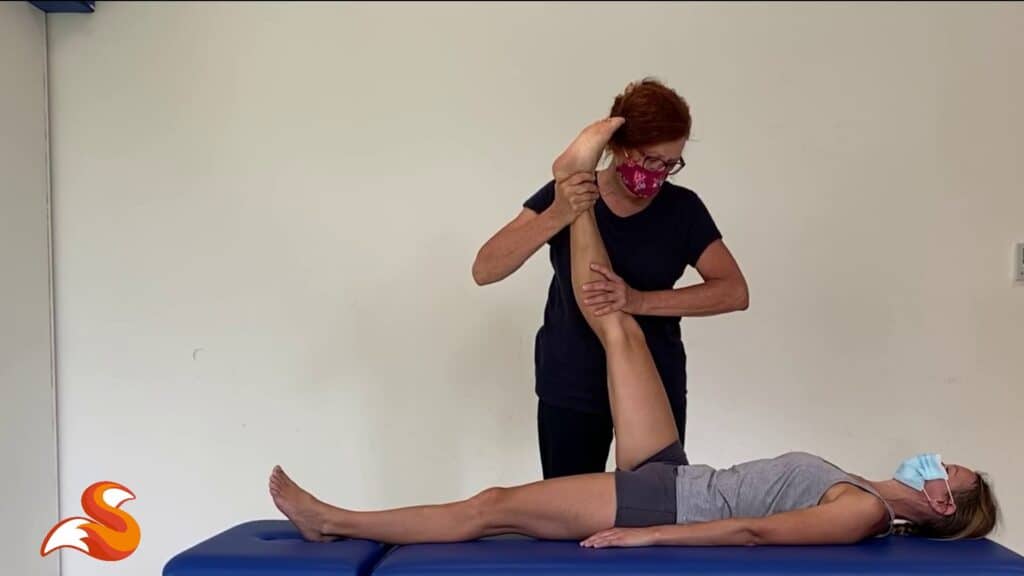
- Perform structured assessments and clinical evaluations
- Apply evidence-based treatment techniques for CMD
- Develop clinical reasoning for complex musculoskeletal conditions
- Integrate craniofacial, craniocervical, and thoracic treatment approaches
Course Content
- Introduction to the Topic
- Background CMD
- Anatomy, Physiology & Pathophysiology
- From the Medical History to the Assessments
- Craniomandibular & Craniofacial Treatment
- Craniocervical and Thoracic Treatment
- Integrative Clinical Reasoning in the Treatment of CMD
- Knowledge Check
Target Audience
- Physiotherapists
- Occupational Therapists
- Sports Therapists
- Movement Scientists
- Physicians
- Dental Technicians
- Nurses
Meet the Instructor

Janne Säkkinen —
Physical Therapist
Janne Säkkinen is a physical therapist specializing in occupational physical therapy, musculoskeletal rehabilitation, and Orthopedic Manual Therapy (OMT). Since 2010, he has focused on improving physical performance and functional well-being through evidence-based treatment and ergonomic interventions. Alongside his clinical work at Terveystalo, Janne lectures on temporomandibular joint disorders (TMJ) and ergonomics, helping healthcare professionals translate scientific knowledge into practical strategies for everyday patient care.
Continuing Education Credits & Certificate
This course qualifies for continuing education credits from recognized professional associations.
- German Association of Occupational Therapists (DVE): 5 points
- German Association of Physiotherapists (ZVK): 5 points
- Umbrella Organization of Medical-Technical Services (MTD): 5 teaching units
- Ergoverband Schweiz (EVS): 1 point
- Physioswiss: 1 point
- Pediatrics Switzerland: 1 CME credit
Certificate
Upon completion, you will automatically receive a personalised certificate confirming your continuing education participation.
Our certificate of participation may also be submitted to professional associations as part of CPD and continuing education applications.
Noch keine Bewertungen
Noch keine Kommentare
Peer Review
Simone Elsig, Physiotherapist OMT Svomp
MSc Physiotherapy, PhD Cand., HES-SO Valais-Wallis, Leukerbad
“This course is a great introduction to TMD, with a good mix of theory, anatomy, examination techniques, treatment approaches, and exercises. It covers muscular, articular, and neurodynamic treatment approaches. The course is engaging and well-structured, combining text, images, videos, and plenty of references for further reading. Learning questions help reinforce what you’ve studied. I really enjoyed working through this course.”
Ready to Improve Your Clinical Approach to CMD?
Related Courses
Integration der Neurodynamik in die Neurorehabilitation (INN®) Expert 1: Grundlagen, Entwicklung und Anwendung
- Kursteil 1: Grundlagen, Entwicklung & Anwendung
- Kursteil 2: Peripheres Nervensystem
- Kursteil 3: Nervensystem als Einheit
- Kursteil 4: Abschlusstest
- Therapeut*innen aus allen Bereichen (Physiotherapie, Ergotherapie, Logopädie, Sporttherapie usw.)
- Ärztinnen und Ärzte
- Heilpädagog*innen
- Bewegungswissenschaftler*innen
- Alle Personen, die mit Menschen mit einer Hirnläsion arbeiten und mehr über den Zusammenhang zwischen Struktur, Funktion, Aktivität und Selbständigkeit wissen möchten.
- 240 Minuten
- German
Zentrales und autonomes Nervensystem (Deutsch/Französisch)
- Kursteil 1: Zentrales Nervensystem
- Kursteil 2: Autonomes Nervensystem
- Kursteil 3: Neuroplastizität
- Kursteil 4: Abschlusstest
- Therapeut*innen aus allen Bereichen (Physiotherapie, Ergotherapie, Logopädie, Sporttherapie usw.)
- Ärztinnen und Ärzte
- Heilpädagog*innen
- Bewegungswissenschaftler*innen
- Pflegefachpersonen
- Alle Personen die mehr über das Zentralnervensystems, deren Funktionen, Schädigungen und Plastizität erfahren möchten.
- 360-500 Minuten
- German
Exekutive Funktionen und deren Relevanz im Alltag
- Kursteil 1: Einführung und Neuroanatomie
- Kursteil 2: Einteilung der exekutiven Funktionen
- Kursteil 3: (Schul-/Berufs-) Alltag&Risikogruppen
- Kursteil 4: Diagnostik&Förderung/Therapie
- Kursteil 5: Abschlusstest
- 120 Minuten
- German
Normales Gehen – Bewegungsabläufe und Muskelfunktion
- 150 Minuten
- German
Scalable Education for Therapy and Rehabilitation Departments
Trusted by therapists, medical doctors and rehabilitation professionals worldwide.
"The course is very well structured, contains a lot of theoretical knowledge and is also put directly into practice with the two case studies. I am looking forward to being able to apply the knowledge I have acquired."

"I found the course very exciting, with a logical flow and lots of good suggestions for everyday life."

"Balanced relationship between theory and practice, knowledge transfer and self-control, very exciting and instructive!"

"Fox reading aloud, multiple-choice questions to answer, video explanations and drawings make it varied, interesting and exciting! Bravo"

"The training is very well structured and organized. Good repetition of the anatomy and subsequent explanation for splint construction."

"Thank you very much for this free course. I only knew the GMFCS and the MACS level before. But as a speech therapist, the CFCS is also very interesting for me. "

"Super good concept and great structure, the questions in the final test could vary a little from the course content to really check understanding."

"Best lesson in cerebral palsy for the upper extremities I have ever had in 35 years of professional experience!"

"I really liked the patient examples. As well as the repetition with the questions. Overall, it was a great, intensive course that lasted more than 8 hours 😉 "

"The course is very well structured, contains a lot of theoretical knowledge and is also put directly into practice with the two case studies. I am looking forward to being able to apply the knowledge I have acquired."

"I have realized how important neurodynamics is in neurological rehabilitation and will approach my patients with a different mindset in the future. Thank you for the good overview and the interactive structure. The individual patient examples were also very helpful."

"Thank you for such a valuable tool! I appreciate the high standard of clear, evidence-based and practical presentation - it's a success. And of course I'm delighted that it doesn't cost anything, which makes it easy to spread the word."

"I was hoping for an update on the subject of neuroplasticity. I have now learned a lot of new things that can be clearly related to practice. I really appreciated the fact that I was able to work through the lessons more than once and interrupt them at any time."

"The course was very intensive, took me longer than 5 hours of study and helped me a lot with my understanding. I think home study with free time organization is great!"