

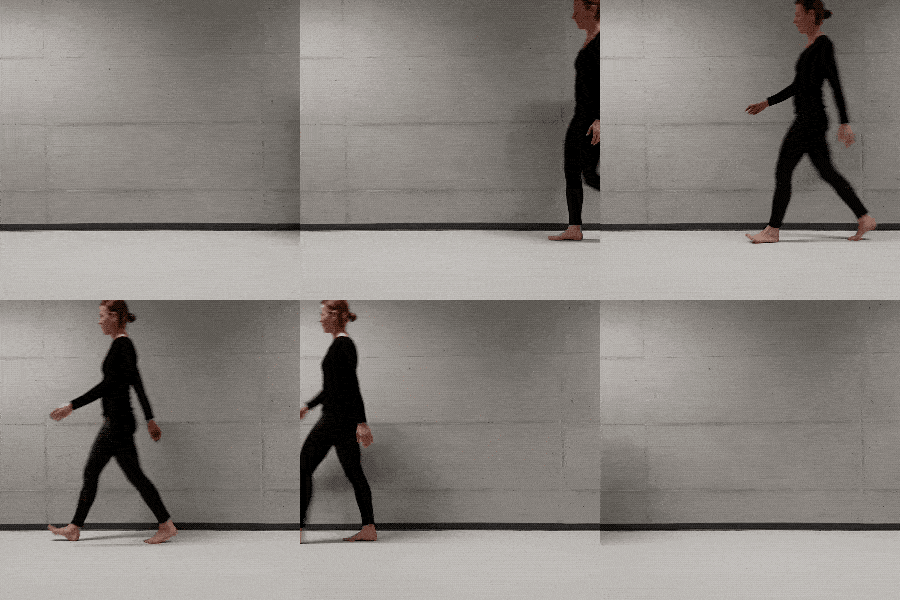
 Normales Gehen – Bewegungsabläufe & Muskelfunktion
€ 148

Führender Experte für Neuroorthopädie und pädiatrische Ganganalyse. Ehemaliger Leiter Neuroorthopädie und Ganglabor am Universitäts-Kinderspital Basel, jahrzehntelange Forschung zu Gangstörungen und zum klinischen Verständnis des Kauergangs. Seine Arbeit untersucht das Zusammenspiel von Biomechanik, Sinneswahrnehmung, Neurologie und psychologischer Sicherheit.



"Der Kurs ist sehr gut strukturiert, enthält viel theoretisches Wissen und wird mit den zwei Fallstudien auch direkt in die Praxis umgesetzt. Ich freue mich darauf, das erworbene Wissen anwenden zu können." – Harieta F., Mobilität der oberen Extremitäten
 Normales Gehen – Bewegungsabläufe & Muskelfunktion
Sie sehen gerade einen Platzhalterinhalt von Google Maps. Um auf den eigentlichen Inhalt zuzugreifen, klicken Sie auf die Schaltfläche unten. Bitte beachten Sie, dass dabei Daten an Drittanbieter weitergegeben werden.
Mehr InformationenSie sehen gerade einen Platzhalterinhalt von Vimeo. Um auf den eigentlichen Inhalt zuzugreifen, klicken Sie auf die Schaltfläche unten. Bitte beachten Sie, dass dabei Daten an Drittanbieter weitergegeben werden.
Mehr InformationenSie sehen gerade einen Platzhalterinhalt von YouTube. Um auf den eigentlichen Inhalt zuzugreifen, klicken Sie auf die Schaltfläche unten. Bitte beachten Sie, dass dabei Daten an Drittanbieter weitergegeben werden.
Mehr InformationenSie sehen gerade einen Platzhalterinhalt von Instagram. Um auf den eigentlichen Inhalt zuzugreifen, klicken Sie auf die Schaltfläche unten. Bitte beachten Sie, dass dabei Daten an Drittanbieter weitergegeben werden.
Mehr InformationenSie müssen den Inhalt von hCaptcha laden, um das Formular abzuschicken. Bitte beachten Sie, dass dabei Daten mit Drittanbietern ausgetauscht werden.
Mehr InformationenSie müssen den Inhalt von reCAPTCHA laden, um das Formular abzuschicken. Bitte beachten Sie, dass dabei Daten mit Drittanbietern ausgetauscht werden.
Mehr InformationenSie sehen gerade einen Platzhalterinhalt von Turnstile. Um auf den eigentlichen Inhalt zuzugreifen, klicken Sie auf die Schaltfläche unten. Bitte beachten Sie, dass dabei Daten an Drittanbieter weitergegeben werden.
Mehr Informationen