Normal walking - movement sequences and muscle functionNormal walking - movement sequences and muscle function
- Instructor:
- Rating:
- 6 months access
- Certificate included
- Downloadable handout
- Self-paced online learning
€ 148
Course Details:
- Learning Time:
- Access Period:
150 minutes
6 months
Course Overview
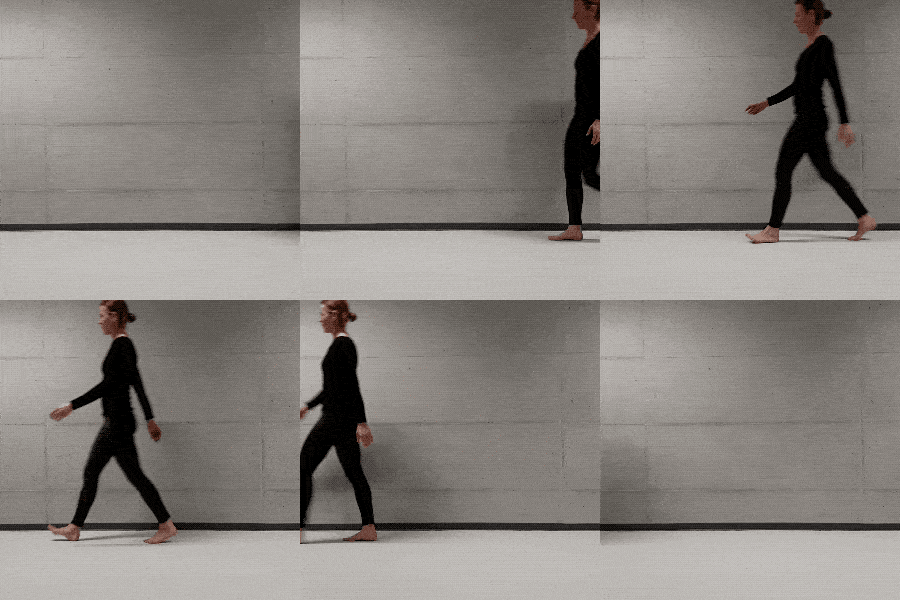
What happens during a normal gait cycle, and how can understanding it improve the assessment of gait disorders?
This foundational course explores the biomechanics and neuromuscular control of normal walking. You’ll gain a clear understanding of gait development, movement sequences, muscle function, and the principles behind instrumented gait analysis.
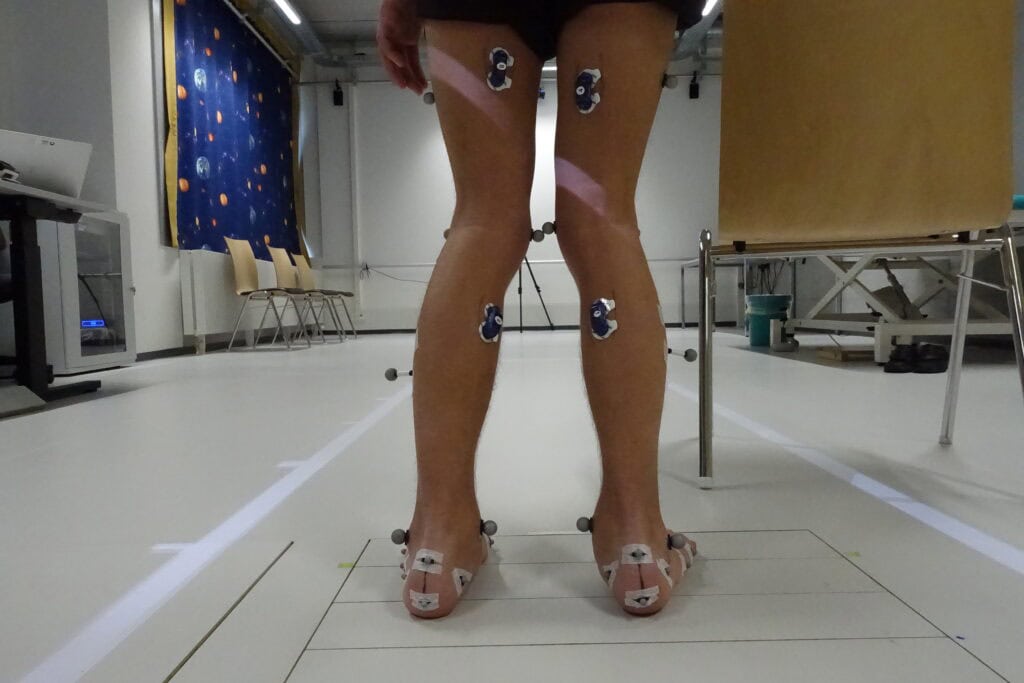
Using current gait analysis methods—including musculoskeletal modelling—you’ll learn how to interpret kinematic, kinetic, and electromyographic data to strengthen your clinical reasoning. The course provides the knowledge needed to better understand normal locomotion, forming the basis for assessing and managing pathological gait patterns.
Practical Application
- Clinical gait assessment
- Interpretation of instrumented gait analysis
- Understanding gait biomechanics
- Clinical reasoning for gait disorders
- Movement analysis in neurological and orthopaedic rehabilitation
- Applying musculoskeletal modelling in practice
What you will learn
- Understand the development and mechanics of normal walking
- Analyse the phases of the gait cycle
- Interpret kinematic, kinetic, and electromyographic data
- Understand movement planning and muscular control during gait
- Explore musculoskeletal modelling and its clinical relevance
- Apply gait analysis findings to improve clinical reasoning
Course Content
Part 1: Natural Gait Pattern
- Introduction to the Topic
- Ontogenesis of Walking
- Normal Walking and the Gait Cycle
- Knowledge Check
Part 2: Instrumented Gait Analysis
- Instrumented Gait Analysis
- Kinematics, Kinetics and Electromyography
- Biomechanics
- Knowledge Check
Part 3: Movement Planning & Muscular Control
- Movement Planning
- Muscular Control
- Musculoskeletal Modelling
Part 4: Final Assessment
- Final Test
Target Audience
- Physical therapists
- Sports Therapists
- Movement Scientists
- Physicians
- Orthopaedic Technicians
- Any healthcare professional involved in gait assessment and rehabilitation
Meet the Instructor

Prof. Dr. Reinald Brunner
Prof. Dr. Reinald Brunner is Head of Neuroorthopaedics at the University Children's Hospital Basel and Director of its Gait Laboratory. An internationally recognised expert in gait analysis, he specialises in understanding normal walking as the foundation for evaluating gait disorders. In this course, he explains gait using muscle force rather than electromyography alone, making muscular activity and its clinical significance easier to understand and apply.
Meet the Instructor
This course qualifies for continuing education credits from recognized professional associations.
- German Association of Physiotherapy (ZVK): 2.5 points
- German Association for Health Sports and Sports Therapy (DVGS): 4 teaching units
- Umbrella Organization for Medical-Technical Services (MTD): 4 teaching units
- Physioswiss: 2 points
- Pediatrics Switzerland: 2 CME credits
Certificate
After successfully completing the course, you will automatically receive a personalised certificate as proof of your continuing professional education. The certificate of participation may also be submitted to professional associations as part of continuing professional development (CPD) and MTD certification requirements.
Comments
Peer Review
Peer review coming soon
Ready to Strengthen Your Gait Analysis Skills?
Related Courses
Scalable Education for Therapy and Rehabilitation Departments
Trusted by therapists, doctors, and rehabilitation professionals worldwide.
"The course is very well structured, contains a lot of theoretical knowledge and is also put directly into practice with the two case studies. I am looking forward to being able to apply the knowledge I have acquired."

"I found the course very exciting, with a logical flow and lots of good suggestions for everyday life."

"Balanced relationship between theory and practice, knowledge transfer and self-control, very exciting and instructive!"

"Fox reading aloud, multiple-choice questions to answer, video explanations and drawings make it varied, interesting and exciting! Bravo"

"The training is very well structured and organized. Good repetition of the anatomy and subsequent explanation for splint construction."

"Thank you very much for this free course. I only knew the GMFCS and the MACS level before. But as a speech therapist, the CFCS is also very interesting for me. "

"Super good concept and great structure, the questions in the final test could vary a little from the course content to really check understanding."

"Best lesson in cerebral palsy for the upper extremities I have ever had in 35 years of professional experience!"

"I really liked the patient examples. As well as the repetition with the questions. Overall, it was a great, intensive course that lasted more than 8 hours 😉 "

"The course is very well structured, contains a lot of theoretical knowledge and is also put directly into practice with the two case studies. I am looking forward to being able to apply the knowledge I have acquired."

"I have realized how important neurodynamics is in neurological rehabilitation and will approach my patients with a different mindset in the future. Thank you for the good overview and the interactive structure. The individual patient examples were also very helpful."

"Thank you for such a valuable tool! I appreciate the high standard of clear, evidence-based and practical presentation - it's a success. And of course I'm delighted that it doesn't cost anything, which makes it easy to spread the word."

"I was hoping for an update on the subject of neuroplasticity. I have now learned a lot of new things that can be clearly related to practice. I really appreciated the fact that I was able to work through the lessons more than once and interrupt them at any time."

"The course was very intensive, took me longer than 5 hours of study and helped me a lot with my understanding. I think home study with free time organization is great!"