Hand splints for the prevention of contractures and deformities in neuropediatrics

You will learn how to independently perform an assessment on patients and make a hand splint.
Jan Lieber, MSc OT
4.8/5

 166

Course Information:

120 minutes

6 months

Course Overview

How can you tell when a child needs a hand splint, and how do you make one that supports function and prevents deformities? This expert course offers a practical model for assessing hand function in children with neurological impairments and for making evidence-based decisions regarding splinting.


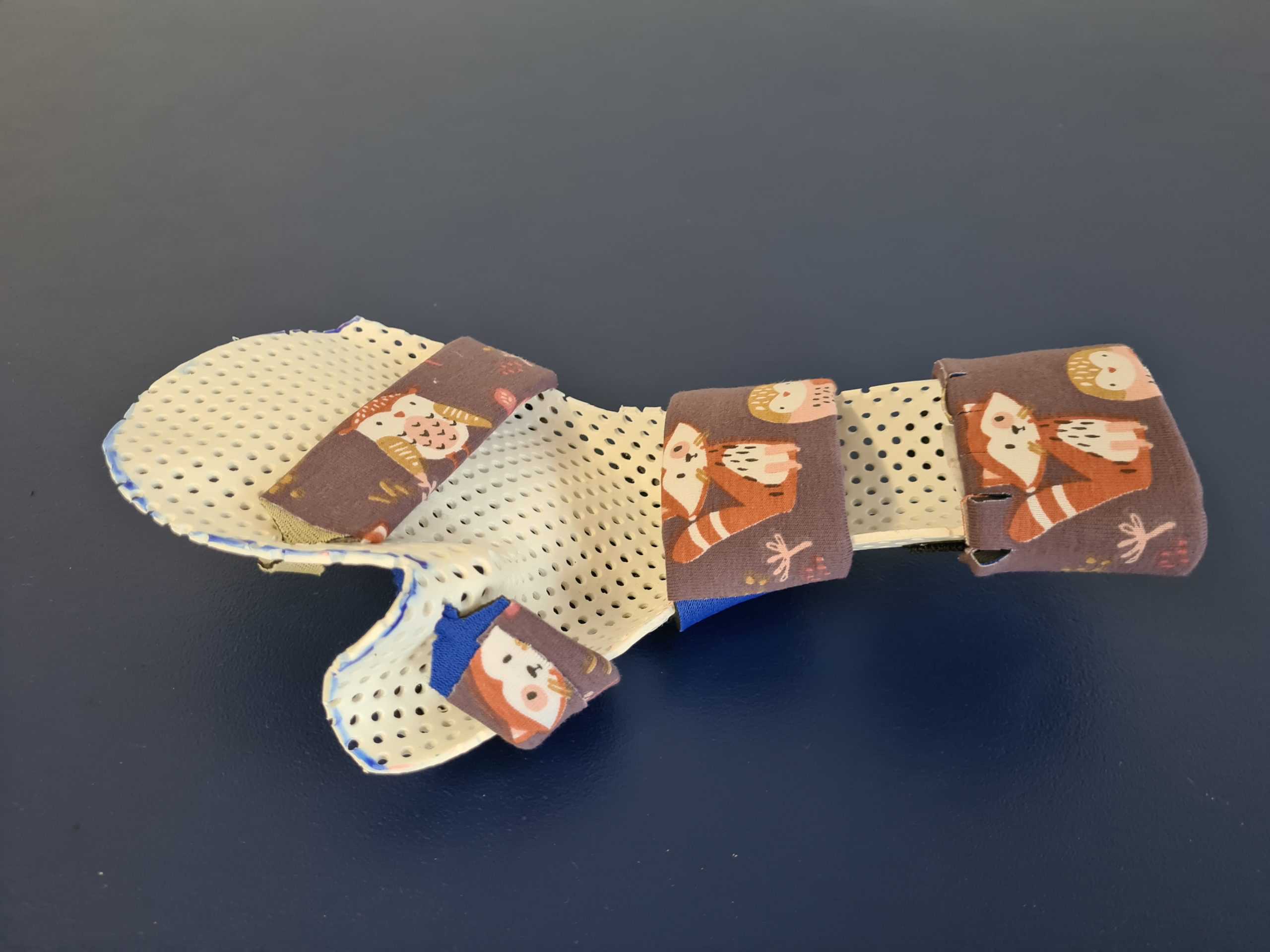
You will learn how contractures and deformities develop, how to assess range-of-motion limitations, and when the use of a splint is clinically appropriate. Building on this foundation, the course will guide you through the process of making a nighttime hand splint using practical techniques and appropriate materials.


You will also learn about the latest scientific evidence to support clinical decisions and effectively communicate treatment recommendations to parents, doctors, and payers.

  • Assessment of Hand Function in Neuropediatric Patients
  • Prevention of Contractures and Deformities
  • Clinical Decision-Making in the Prescription of Hand Splints
  • Manufacturing Custom Night Splints
  • Communicating Treatment Recommendations to Families and Professionals
  • Evidence-Based Splint Treatment in Clinical Practice
  • Understand the anatomical principles relevant to the treatment of hand fractures
  • Assessing Range of Motion Limitations and Distinguishing Structural Changes
  • Conduct a comprehensive clinical assessment for splint treatment
  • Determining When a Hand Splint Is Indicated
  • Making a Functional Night Splint
  • Apply current scientific evidence to support treatment decisions
Part 1: Introduction & Basics

Jan Lieber, MSc OT

Occupational therapist with a Master of Science degree from Danube University Krems. Taught neuropediatrics to occupational therapy students at the Medical Academy of Freiburg; has many years of clinical experience treating children with neurological impairments. Expertise in evidence-based neuropediatric rehabilitation and hand splinting.


This course qualifies participants for continuing education credits from recognized professional associations.

Certificate

Upon completion, you will automatically receive a personalized certificate as proof of your participation in the training.

Our certificate of participation can also be submitted to professional associations as part of continuing education applications.

Overall Course Rating

Comments

Tamara on January 5, 2025
Very good, especially the videos. I'd like to see some longer videos.
The videos are great, but the examination videos could be a little longer and maybe include some slow-motion footage.
Bettina on July 25, 2024
Very satisfied with the course
A great summary of all the key information regarding orthodontic treatment, presented in a very clear and concise manner. Very useful for daily practice and helpful for making decisions. It would also be interesting to see some patient examples where the decision or adjustment wasn’t quite so straightforward.
Andrea on July 6, 2024
Theoretical knowledge presented in a well-organized way—great course!
As always, a wealth of theoretical knowledge presented in a well-structured and clear manner. There is a lot of background information on the topic of children’s hands in neuropediatrics, which is also interesting for therapists who already have experience in making hand splints. For those new to making hand splints, additional guidance might be necessary (e.g., pressure points, the splint slipping off...).
Manuela on February 22, 2024
great foundation
The course is very structured and straightforward. All of the course content is very easy to understand. To explore the topic in greater depth, additional course content and practical exercises would certainly be needed.
Jaen on May 6, 2023
strong practical focus
Thank you; I was able to apply what I learned right away at our clinic. Until now, I wasn't sure when to decide in favor of—or, at times, against—using a hand splint.

Peer Review

The peer review will follow shortly.

Ready to master the use of hand splints in neuropediatrics?

Similar Courses

Dart Hits the Target

BeSmart – Understanding and Setting Therapeutic Goals Correctly

In this course, you'll learn how to set goals professionally and apply this skill in your daily therapeutic practice.

Contents:
  • The ICF Levels, particularly environmental factorsand personal factors
  • Involvement of Family Members, Resources, and Barriers
  • Bottom-Up and Top-Down
  • DistinguishingBetween Performanceand Capacity
  • Self-employedwhat does that mean for the goal?
  • SMART
  • Final Test
Course language: German Target audience:
  • Therapists from all fields (physical therapy, occupational therapy, speech therapy, sports therapy, etc.)
  • Nurses
  • Physicians (CME credits)
  • Special Education Teachers
  • Kinesiologists*
You'll need: Computer, laptop, or tablet Study time: 60 minutes Course duration: 6 months
Cover image from the foxstudy online course on upper extremity mobility

Upper Limb Mobility in Children with Cerebral Palsy

Objective: This course will improve your therapeutic interventions related to upper extremity mobility in pediatrics and provide a scientific foundation for your treatment. With the help of sample patient cases and numerous interactive elements, learning is truly enjoyable. Contents:
  • Course Module 1: Introduction to Mobility in Cerebral Palsy
  • Course Section 2: Fundamentals of Anatomy and Structural Differentiation
  • Course Section 3: ICF Framework
  • Course Section 4: Therapeutic Approach and Application to Everyday Life
  • Course Section 5: Final Test
Course language: You can choose between German and French. Target audience: Physical therapists, occupational therapists, registered nurses, physicians, and orthopedic technicians. You'll need: Computer, laptop, or tablet Study time: 5 hours Course duration: 6 months

Understanding and Applying the ICF

Objective: The ICF, as a conceptual model, is an enormous help in our day-to-day work, and we don’t need to know every last detail of it to benefit from it. In this course, you’ll learn how the ICF is structured and why this model helps you understand the complex interrelationships involved in changes in health status. Contents:
  • The Description of the ICF
  • The Bio-Psycho-Social Model
  • Diagnosis and the ICF in Context
  • Conceptual Model and Application
  • Final Test
Course language: You can choose between German and French. Target audience: Nurses, physical therapists, occupational therapists, sports therapists, physicians, orthopedic technicians, educators, neuropsychologists You'll need: Computer, laptop, or tablet. Study time: 60 minutes Course duration: 6 months

Scalable Continuing Education for Therapy and Rehabilitation Departments

Tried and tested by therapists, doctors, and rehabilitation specialists.

Shopping Cart
Hand splints for the prevention of contractures and deformities in neuropediatricsHand splints for the prevention of contractures and deformities in neuropediatrics
 166
Scroll to the top